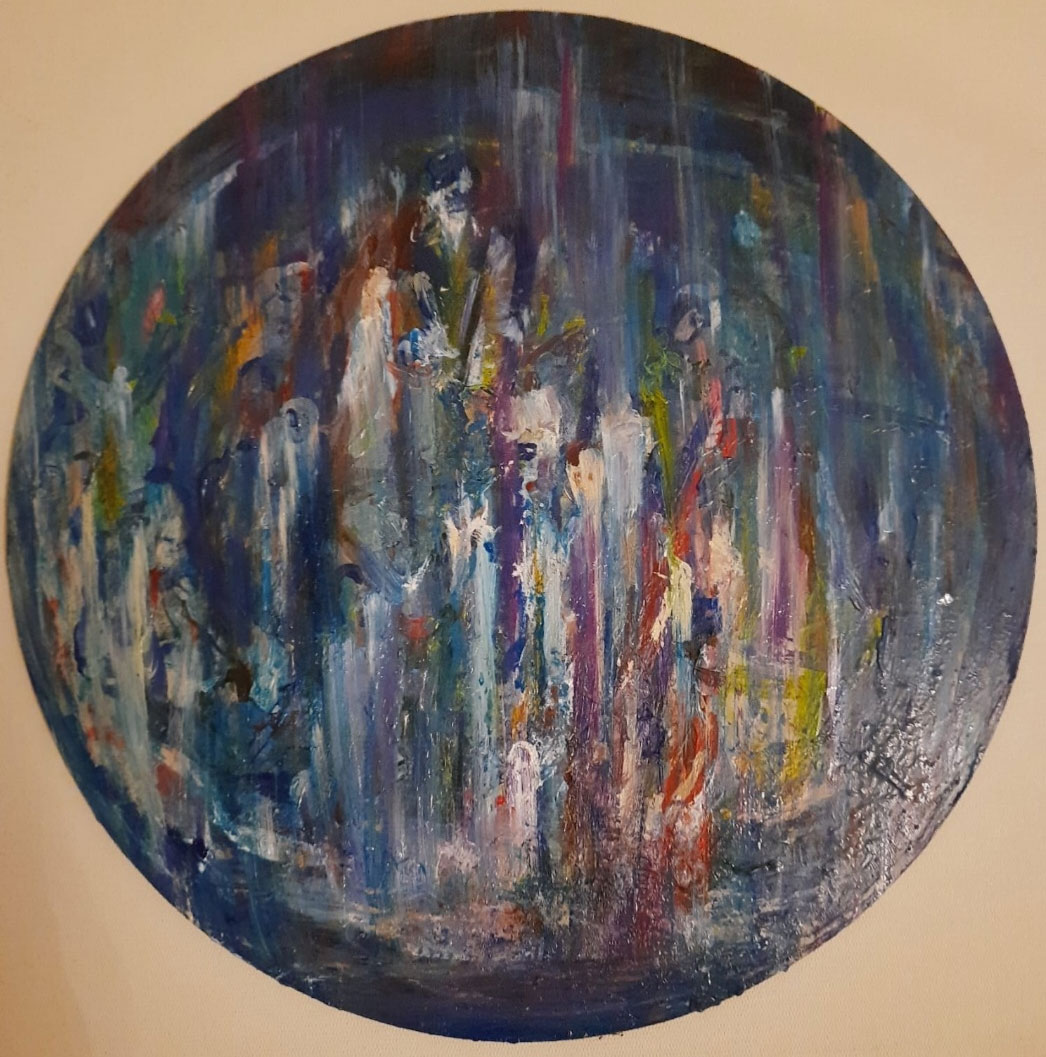



Part 4
26 April 2026T he artistic realm—the sphere or dimension of creativity—is, in my view, a state of revelation. For instance, I have a screenplay draft—which I’ve tentatively titled "Catharsis"—for which even the poster is already finished. The story is compelling, the poster looks great, but the screenplay itself isn't quite there yet; it seems that every creative endeavor has its own unique path and space for emergence. I believe one must first learn this path, then promptly forget it—drifting into a deep slumber, only to wake up and encounter the work as if for the very first time. Yet, even while knowing it isn't truly new, one must—blinking, perhaps, in the sudden light—feel an irrepressible urge to set down a single word, a single line, or a single action. I take singing lessons, for example; right after my young children finish their piano lessons, my instructor tells me not to strain my throat—to direct the sound upward, but to keep it from reaching the head—to just let it rest in that specific space. To me, the sound I produce feels terrible, but the instructor insists, "No, that’s it—that’s the right way." In short, one needs to understand what the outcome *should* be—without overdoing it—yet forcing the process in an attempt to "know" it only prevents that very thing from emerging. I believe creativity lies in the narrow gap between what *should* be and what *is*—in the act of bringing forth "that thing" which might even appear to be a mere coincidence. There is always a search—a quest that reaches even beyond death. In my opinion, the best comedian is the one who, when asked why something is the way it is, simply replies, "How should I know?"